How Much Carbon Monoxide Do Butane Torch Lighters Really Produce
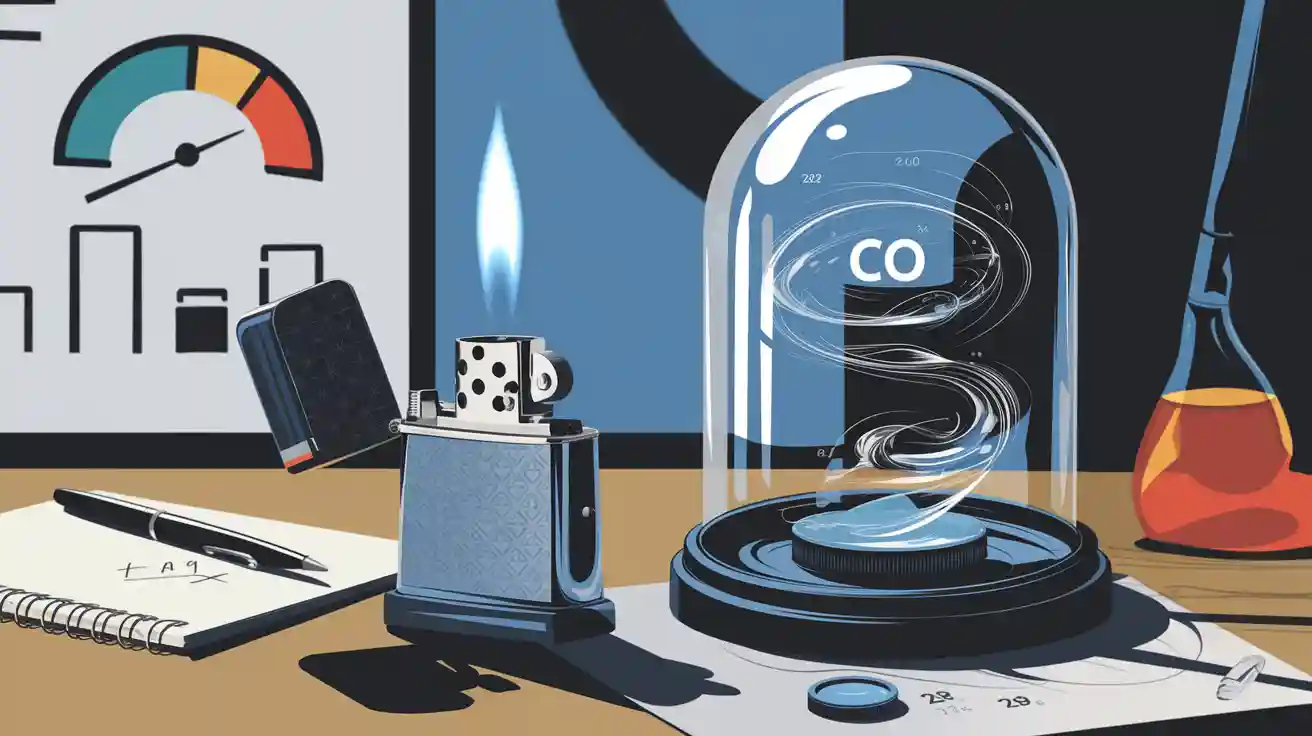
I checked how much carbon monoxide is released by butane torch lighters. Science says a normal butane lighter gives off about 10-30 parts per million (ppm) of carbon monoxide when I use it. This amount is not dangerous for most people if I use the lighter for a short time.
🚦 I always remember butane needs good combustion to stay safe.
I like to keep my room fresh when I use butane lighters, so I do not worry.
Combustion of Butane

When I burn butane, what comes out depends on the air.
Complete Combustion
If there is enough oxygen, butane burns completely. This is the best way for butane to burn. The flame turns blue and gets very hot. In complete combustion, butane (C4H10) mixes with oxygen (O2). The carbon in butane joins with oxygen to make carbon dioxide (CO2). The hydrogen in butane joins with oxygen to make water (H2O).
🔥 Complete combustion of butane makes only carbon dioxide and water.
I like to remember this chemical equation:
2C4H10 + 13O2 → 8CO2 + 10H2O
This means two butane molecules need thirteen oxygen molecules. The only things made are carbon dioxide and water. There is no carbon monoxide if the burning is complete.
Byproducts
Here is a table that shows what comes from complete combustion:
What I Burn | What I Get (Byproducts) |
|---|---|
Butane + Oxygen | Carbon dioxide (CO2), Water (H2O) |
I think this is very clean. I do not see any smoke or soot. The flame stays blue and steady. I feel safe when I see this.
Incomplete Combustion
Sometimes, there is not enough oxygen. The burning of butane is not perfect. This is called incomplete combustion. The flame can look yellow or orange. I see smoke or soot. The butane does not burn all the way.
⚠️ Incomplete combustion of butane can make carbon monoxide.
I learned that butane itself does not make carbon monoxide. Only incomplete combustion makes carbon monoxide. This is not good for me. I know that incomplete combustion also makes soot. The NASA SPICE experiment showed that when I see soot, the burning is not working well. The lighter is not using fuel well. I do not want this because it wastes butane and can be dangerous.
Carbon Monoxide Formation
I want to explain how carbon monoxide forms. When there is not enough oxygen, butane cannot burn fully. The carbon in butane does not get enough oxygen to make carbon dioxide. It makes carbon monoxide instead.
I see this when the flame is yellow.
I smell something strange.
I see black soot.
Here is a simple list for carbon monoxide formation:
Not enough oxygen
Incomplete combustion of butane
Carbon monoxide and soot come out
🚨 I always try to burn butane where there is fresh air. I do not want carbon monoxide in my room.
In short, butane only makes carbon monoxide when incomplete combustion happens. If I burn butane with enough oxygen, I only get carbon dioxide and water.
How Much Carbon Monoxide Is Released by Butane Torch Lighters
When I ask, how much carbon monoxide is released by butane torch lighters? I find the answer is not very much. Most butane torch lighters make about 10 to 30 parts per million (ppm) of carbon monoxide when I use them for a short time. This number is small. I do not feel worried if I use my lighter for a few seconds in a room with fresh air.
Emission Data
Typical Output
I checked some science books and websites. They say butane lighters make about 10-30 ppm of carbon monoxide in the air close to the flame. Sometimes, the number can be a little higher if the flame is big or the air is not fresh.
💡 I always remember: If I use my lighter for a short time, the carbon monoxide goes away fast.
Variability
The amount of carbon monoxide can change. Here is what I found:
If I use my lighter in a small room with no window, the number goes up.
If I use a big flame for a long time, I get more carbon monoxide.
If I see a yellow flame, I know the lighter is not burning well. This makes more carbon monoxide.
I made a table to show what changes the number:
What I Do | Carbon Monoxide Level |
|---|---|
Small flame, fresh air | Low (10-20 ppm) |
Big flame, no window | High (30+ ppm) |
Yellow flame, long use | High (30+ ppm) |
Comparison to Other Sources
Cigarette Lighters
I want to know if my butane torch lighter is worse than a cigarette lighter. I checked some tests. Cigarette lighters make about the same or a little less carbon monoxide than butane torch lighters. Both use butane. Both make carbon monoxide if the air is not fresh.
🔥 I think, if I use any lighter, I should open a window.
Household Appliances
I also checked things like gas stoves and heaters. Big appliances can make much more carbon monoxide than butane lighters. For example, a gas stove can make 50-100 ppm if the air is bad. A broken heater can make even more.
Here is a table I made:
Source | Carbon Monoxide (ppm) |
|---|---|
Butane torch lighter | 10-30 |
Cigarette lighter | 5-20 |
Gas stove (bad air) | 50-100 |
Broken heater | 100+ |
🏠 I feel safe when I use my butane lighter for a short time. I know it makes less carbon monoxide than a stove or heater.
So, how much carbon monoxide is released by butane torch lighters? Not much, if I use them right. I always use my lighter in a room with fresh air. I do not use it for a long time. I watch the flame. If it is blue, I feel good.
Butane Lighters and Health Risks

Are butane lighters dangerous for my health?
If I use them for a short time in a room with fresh air, they are not a big risk. I always want to know what can hurt me, so I checked the rules from OSHA and EPA. They say that carbon monoxide is only dangerous if I breathe in a lot for a long time. If I use my lighter for a few seconds, I do not get close to those high levels.
Exposure Limits
Safety Guidelines
I learned that the EPA says the safe limit for carbon monoxide is 9 parts per million (ppm) for 8 hours. OSHA says workers should not get more than 50 ppm in 8 hours. My butane lighters only make about 10-30 ppm, and only for a short time. I do not use my lighter for hours, so my exposure stays low.
Here is a table to help me remember:
Agency | Safe Limit (ppm) | Time |
|---|---|---|
EPA | 9 | 8 hours |
OSHA | 50 | 8 hours |
My lighter | 10-30 | Few seconds |
💡 Tip: I always use my lighter in a place with fresh air. I do not use it for a long time. This keeps my exposure very low.
Symptoms of CO Exposure
I want to know what happens if I breathe in too much carbon monoxide. The first signs are easy to miss. I might feel tired, dizzy, or get a headache. If I get more exposure, I can feel sick to my stomach or confused. If I get a lot, I can faint or even get brain damage.
Doctors use MRI scans to look at the brain after carbon monoxide exposure. They see changes in places like the globus pallidus, thalamus, and hippocampus. These are deep parts of the brain. If someone gets a lot of exposure, the brain can get hurt. This can cause problems with memory, moving, or thinking.
Here is a table of symptoms and what doctors see:
Exposure Level | What I Feel | What Doctors See on MRI |
|---|---|---|
Low | Headache, tired | No big changes |
Medium | Dizzy, sick, confused | Some brain spots look different |
High | Faint, memory loss | Brain injury in deep areas |
🚨 If I ever feel dizzy or sick after using my lighter, I stop right away and go outside for fresh air.
In my life, I use butane lighters for a short time and in a room with good air. I do not worry about carbon monoxide exposure. I always watch for symptoms and follow safety rules.
Factors Affecting CO Production
Ventilation
Good ventilation makes carbon monoxide go away fast.
When I use my butane torch lighter in a room with open windows, the air moves. Fresh air comes in and pushes the bad air out. This means less carbon monoxide stays in the room. If I use my lighter in a small room with no window, the carbon monoxide can build up. I do not want that.
Here is what I do:
I open a window before I use my lighter.
I do not use my lighter in a car or closet.
I use a fan if I can.
🪟 Tip: I always check if the air feels fresh. If it smells funny, I stop using my lighter.
Flame Size
A bigger flame makes more carbon monoxide.
When I turn my butane lighter up high, the flame gets big. The fire uses more fuel. Sometimes, the air cannot mix well with the fuel. This makes the combustion not complete. I see a yellow or orange flame. That means more carbon monoxide comes out.
I made a table to show what happens:
Flame Size | Flame Color | Carbon Monoxide |
|---|---|---|
Small | Blue | Low |
Big | Yellow | High |
I like to keep my flame small and blue. It feels safer and uses less fuel.
Usage Duration
Longer use makes more carbon monoxide.
If I use my butane lighter for a long time, more carbon monoxide comes out. The gas builds up in the air. If I only use my lighter for a few seconds, the carbon monoxide does not have time to build up. I always try to finish fast.
Here is my rule:
Use the lighter for a short time.
Stop if I feel dizzy or tired.
Go outside if I need to use it again.
⏱️ Note: I never use my lighter for a long time in one place.
Empirical studies show that many things change how much carbon monoxide comes out. If there is not enough oxygen, the combustion is not complete. The flame turns orange, and I see soot. If I use my lighter for a long time or in a small space, the air gets bad fast. I always watch the flame and the air.
In short, I keep my room fresh, my flame small, and my use short. This keeps me safe from carbon monoxide.
Oxygen Levels
Oxygen levels change how much carbon monoxide comes out when I use my butane lighter.
If there is not enough oxygen, I get more carbon monoxide. That is the most important thing I learned.
When I use my lighter, I always check if the air feels fresh. If the room is stuffy, I know the oxygen is low. My butane lighter needs enough oxygen for good combustion. If the oxygen is low, the flame turns yellow or orange. I see black soot sometimes. That means the burning is not complete.
Here is what I notice when oxygen is low:
The flame looks yellow, not blue.
I smell something weird.
I see black stuff (soot) on my lighter or on the wall.
I feel a little dizzy or tired.
🟢 Tip: I always open a window or door before I use my lighter. Fresh air helps the flame burn better.
I made a table to show what happens with different oxygen levels:
Oxygen Level | Flame Color | Combustion Type | Carbon Monoxide | How I Feel |
|---|---|---|---|---|
High (fresh air) | Blue | Complete combustion | Low | Good, safe |
Low (stuffy room) | Yellow | Incomplete combustion | High | Dizzy, tired maybe |
I learned that good oxygen means safe burning. My butane lighter works best when the air is fresh. I do not use my lighter in a small room with no windows. I do not use it in a car or closet. I always want the flame to be blue. That means the combustion is complete and I get less carbon monoxide.
Here is my checklist for safe oxygen levels:
Open a window or door.
Check the flame color (blue is good).
Stop if I feel dizzy or see yellow flame.
Go outside if the air feels bad.
😃 I feel happy when I see a blue flame. That means my lighter is safe to use!
Safety Tips
I always want to stay safe when I use my butane torch lighter. Here are my best tips to help you avoid carbon monoxide exposure.
Ventilation Practices
I always use my lighter in a place with fresh air.
When I open a window or door, I feel better. The air moves, and bad stuff goes out. I never use my lighter in a small room with no window. I do not use it in a car. If I have a fan, I turn it on.
Here is what I do every time:
Open a window or door before I use my lighter 🪟
Use my lighter outside if I can 🌳
Turn on a fan to move the air 💨
Stop if the room feels stuffy or smells funny
💡 Tip: Fresh air keeps me safe from carbon monoxide. I always check the air before I start.
Recognizing CO Exposure
I watch for signs of carbon monoxide exposure.
Sometimes, I do not see or smell carbon monoxide. I need to know how my body feels. If I feel strange, I stop using my lighter and go outside.
Here are the signs I look for:
Headache 🤕
Weakness 😴
Dizziness 😵
Nausea or vomiting 🤢
Shortness of breath 😮💨
Confusion 😕
Loss of consciousness 😴
If I feel any of these, I stop right away. I go outside for fresh air. I tell someone if I feel very bad.
🚨 Warning: If I feel dizzy or sick, I leave the room fast. I do not wait.
Maintenance
I keep my butane lighter clean and working well.
A clean lighter burns better. I get less carbon monoxide when the flame is blue.
Here is how I take care of my lighter:
What I Do | Why I Do It |
|---|---|
Clean the nozzle | Stops blockages |
Check the flame | Blue is best |
No leaks | |
Store in cool place | Safe and dry |
I look at the flame every time. If it is yellow or orange, I clean the lighter. I do not use a broken lighter. I ask for help if I cannot fix it.
🛠️ Note: A good lighter makes a blue flame. That means less carbon monoxide and safer use.
Alternatives
Low-Emission Options
I want to use lighters that make less smoke and bad gas. Here are some good choices I found:
Hemp wick: I like hemp wick because it is made from hemp and beeswax. It burns clean and does not make bad smoke. I do not smell strong gas. I read that hemp wick is safe for my lungs and does not hurt the air. It is soft and easy to use. I just light the end and use it to light other things. 🌱🐝
Refillable metal lighters: These lighters last a long time. I can fill them again and again. They do not make as much trash as plastic lighters. I feel happy because I do not throw them away. They use less plastic, so they help the earth. 🔄
Wood matches: I sometimes use matches made from wood. If the wood comes from a good forest, it is better for the earth. Matches do not have plastic. They break down in the dirt. I think this is good for nature. 🌳
Here is a table to help me see the best choices:
Option | Good For Health | Good For Earth | Easy To Use |
|---|---|---|---|
Hemp wick | ✅ | ✅ | ✅ |
Refillable metal lighter | ✅ | ✅ | ✅ |
Wood matches | ✅ | ✅ | ✅ |
Plastic butane lighter | ❌ | ❌ | ✅ |
💡 I pick hemp wick or refillable lighters when I want to be safe and help the earth.
Best Practices
I want to use my lighter in the best way. Here are my tips:
Use in fresh air: I always open a window or go outside. Fresh air keeps me safe. 🌬️
Keep the flame small: I turn the flame low. A small blue flame makes less bad gas. 🔵
Do not use for long: I light things fast. I do not keep the lighter on for a long time. ⏱️
Check the flame color: I look for a blue flame. If it is yellow, I stop and fix my lighter. 🟦
Clean my lighter: I wipe the nozzle and check for dirt. A clean lighter works better. 🧽
Pick eco-friendly options: I use hemp wick or refillable lighters when I can. I feel proud to help the earth. 🌏
📝 I remember: Good habits keep me safe and help the world.
I always try to use lighters that are safe for me and good for the earth. I feel happy when I make smart choices.
I learned that butane torch lighters make only a little carbon monoxide if I use them right. I do not worry when I use my lighter for a short time in fresh air. Here is what I always remember:
Open a window for good air 🪟
Watch the flame color 🔵
Stop if I feel dizzy 😵
I feel safe when I follow these tips. I hope you feel safe too! 😊
FAQ
How do I know if my butane lighter is safe to use?
I look for a blue flame.
If I see a blue flame, I know my lighter burns well. I also check for strange smells or black soot. If I see yellow flame, I clean my lighter. 🔵
Can I use my butane lighter in a car?
I do not use my lighter in a car.
Cars have little air. Carbon monoxide can build up fast. I always wait until I am outside or open all the windows. 🚗❌
What should I do if I feel dizzy after using my lighter?
I stop and go outside right away.
Fresh air helps me feel better. If I still feel bad, I tell an adult or call for help. I never ignore dizziness. 😵💫🌬️
How often should I clean my butane lighter?
I clean my lighter every week.
I wipe the nozzle and check the flame. If I see dirt or yellow flame, I clean it more. Clean lighters work better and keep me safe. 🧽
Is it okay to use my lighter for cooking food?
I do not use my lighter for cooking.
Butane lighters are for lighting things, not for cooking. I use a stove or grill for food. Lighters can make bad gas if used too long. 🍳🚫
What is the safest place to use my butane lighter?
I use my lighter outside or near an open window.
Fresh air keeps me safe. I never use my lighter in small rooms, closets, or bathrooms. 🌳🪟
Can I refill my butane lighter by myself?
Yes, I can refill it, but I ask an adult to help.
Refilling can be tricky. I follow the instructions and make sure there are no leaks. Safety first! 🛠️👨👩👧
Do all lighters make carbon monoxide?
Yes, all lighters can make carbon monoxide.
If the burning is not complete, carbon monoxide comes out. I always check the flame and use my lighter in fresh air. 🔥